07 Novembre 2024 , Scritto da Vincenzo Sebastiano
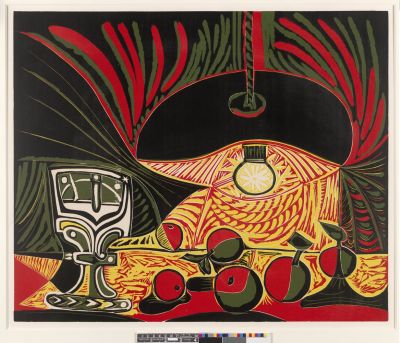
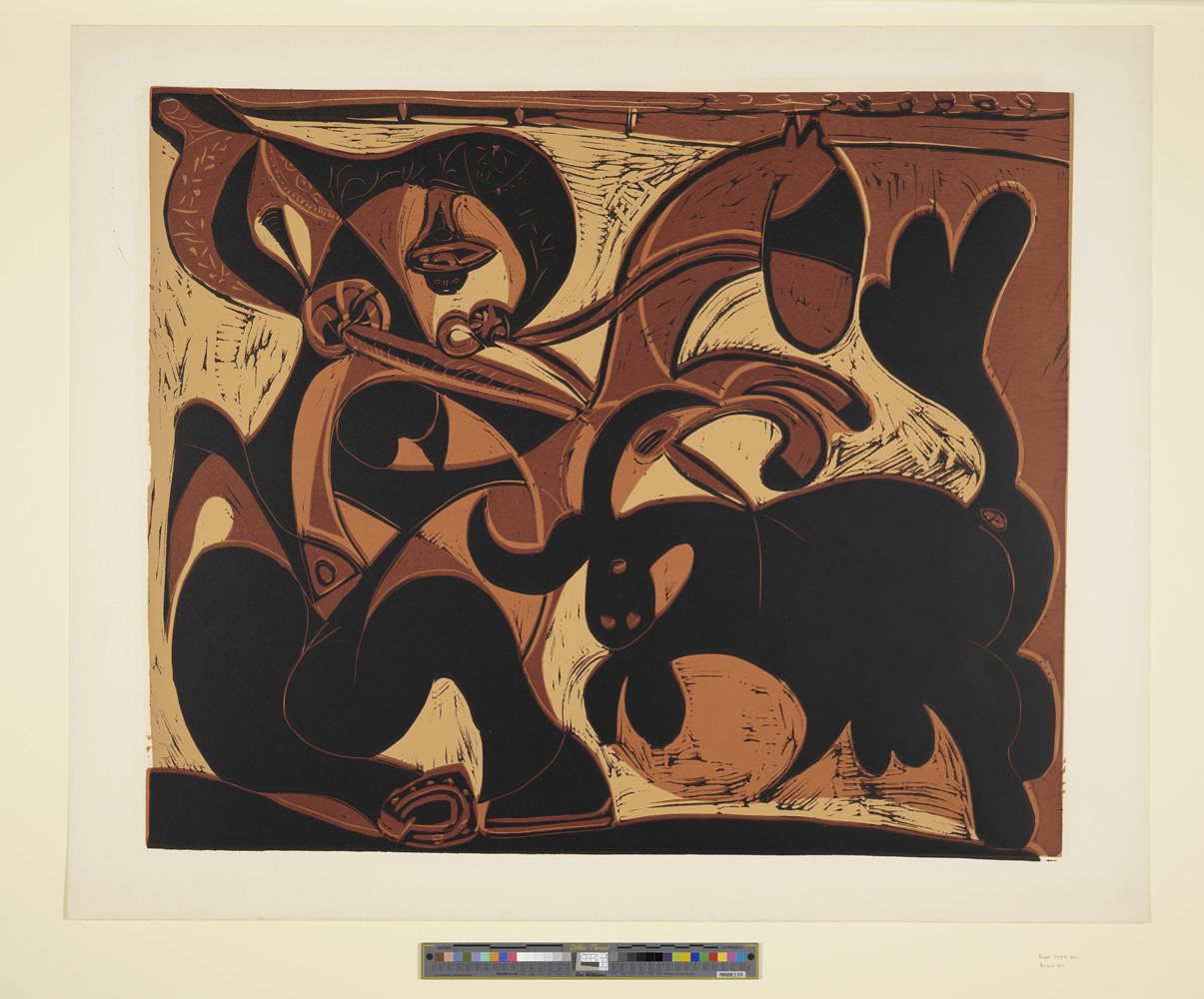
Still life under the lamp, 1962
© Succession Picasso/DACS, London 2024.
This colour linocut is considered to be one
of Picasso’s greatest achievements in linocut
printmaking. Picasso continued to
experiment with his printmaking, using the
‘reduction linocut’ technique, which
enabled him to print an image from one
block, cutting away at it in sections to print
each colour. The Museum holds a collection
of linocuts that demonstrate this technique,
most notably the proofs for each stage of
Still Life Under the Lamp. It is one of a group
of linocuts acquired by the BM in 2013.
Al British Museum un racconto inusuale della carriera di Pablo Picasso , quello delle sue stampe, realizzate nel corso della sua lunga vita. Fino al 25 Marzo 2025.
Pablo Picasso (1881–1973) è stato uno dei talenti più innovativi, geniali e influenti che abbiano mai esplorato ed utilizzato la tecnica della stampa.
Oltre ai suoi numerosi dipinti, sculture e disegni, l'artista di Malaga ha realizzato oltre 2.400 stampe durante la sua carriera. Dai suoi primi anni come artista a Parigi fino alla sua vecchiaia nel sud della Francia, l'incisione ha offerto a Picasso l'opportunità di sviluppare idee, raccontare storie e intraprendere nuove avventure sempre più creative e complesse.
La mostra al British Museum offre notevoli spunti per approfondire alcuni aspetti della vita di Picasso attraverso la sua arte, compresi i complessi rapporti con le donne e le collaborazioni con tipografi, editori e altri artisti. Coprendo tutta la sua carriera, segue il suo impegno con diverse tecniche di incisione e i suoi mutevoli approcci alla creazione artistica.
Il British Museum detiene di gran lunga la collezione di stampe di Picasso più grande e rappresentativa di tutto il Regno Unito.
La mostra comprende oltre 100 stampe realizzate dall'artista in diversi periodi della sua straordinaria carriera; sono di differenti dimensioni ed includono pezzi già noti, ma anche stampe minori, meno famose, che non erano mai state esposte in Gran Bretagna precedentemente
Le opere sono state realizzate all'inizio del 1900, prima e dopo il dipinto rivoluzionario di Picasso Les Demoiselles d'Avignon Suite Vollard , una serie di 100 acqueforti realizzate negli anni ‘30 che mostrano l'influenza dell'arte classica sull'opera di Picasso ma riflettono la sua tumultuosa vita personale.
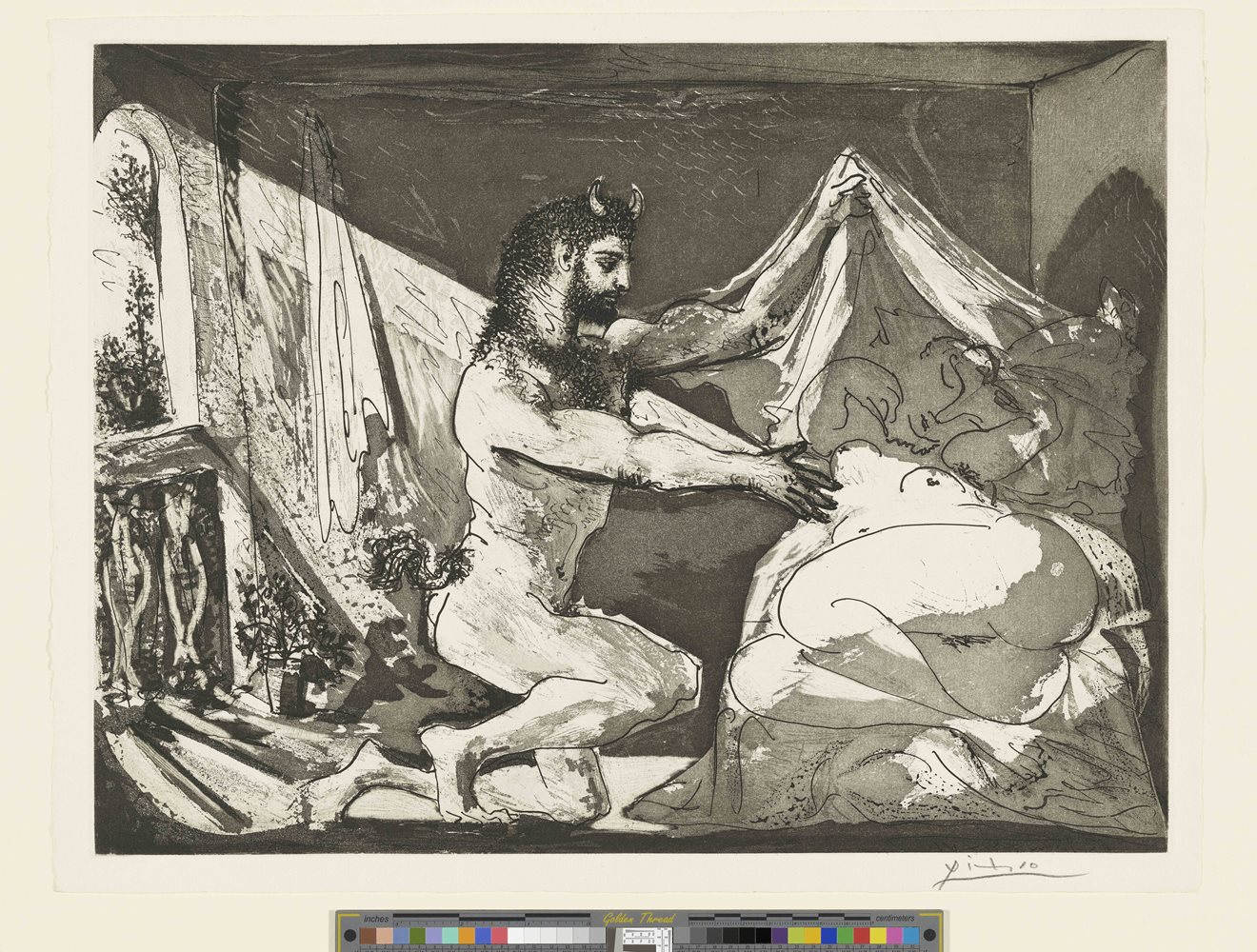
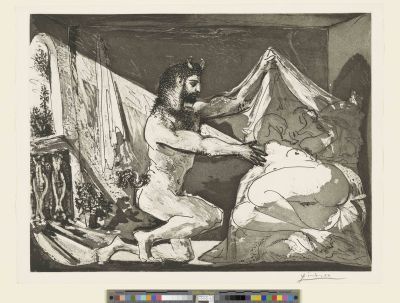
Faun uncovering a woman, 12 June 1936
© Succession Picasso/DACS, London 2024.
This print from the Vollard Suite is a sugar
aquatint, scraper and engraving. The British
Museum acquired all 100 etchings from the
Vollard Suite (1930-37) in 2011 as a gift
from Hamish Parker and held an exhibition
in 2012. The current exhibition will show a
selection of his prints from the suite in the
context of his entire printmaking career,
showing the influence of classical art in the
1920s and 30s and the development of his
skills as a printmaker at this time.
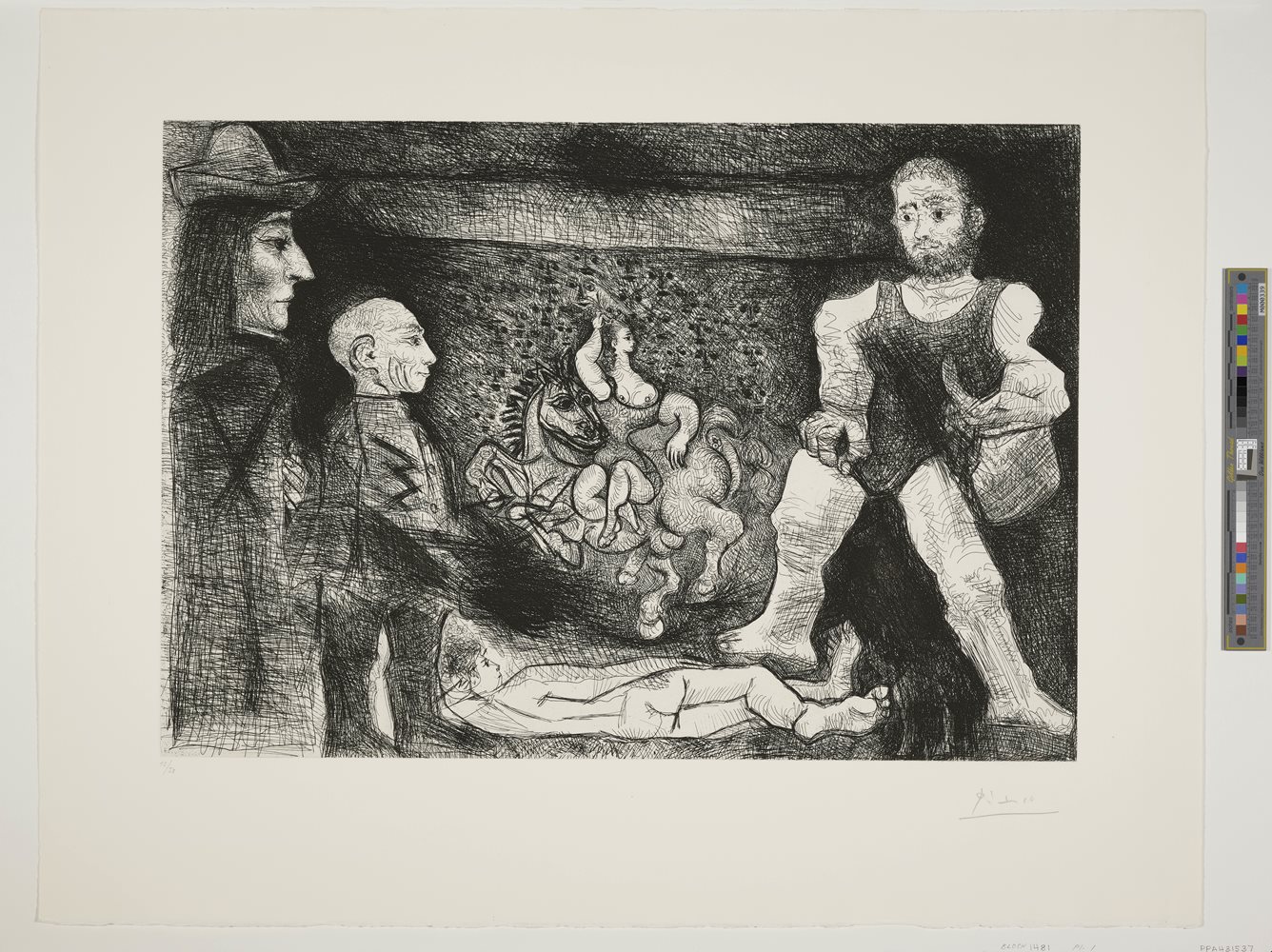
Picasso, his work and his audience, 16-22
March 1968
© Succession Picasso/DACS, London 2024.
This is the first etching in the 347 Suite. In
1968, aged 86, Picasso produced 347
etchings, drypoints and aquatints in under
seven months. Together they became
known as the 347 Suite. Five prints from the
suite, including this one, were shown in
Gallery 90 in the 2018-19 exhibition New
Acquisitions: Gozzoli to Kara Walker, but no
others have been shown.
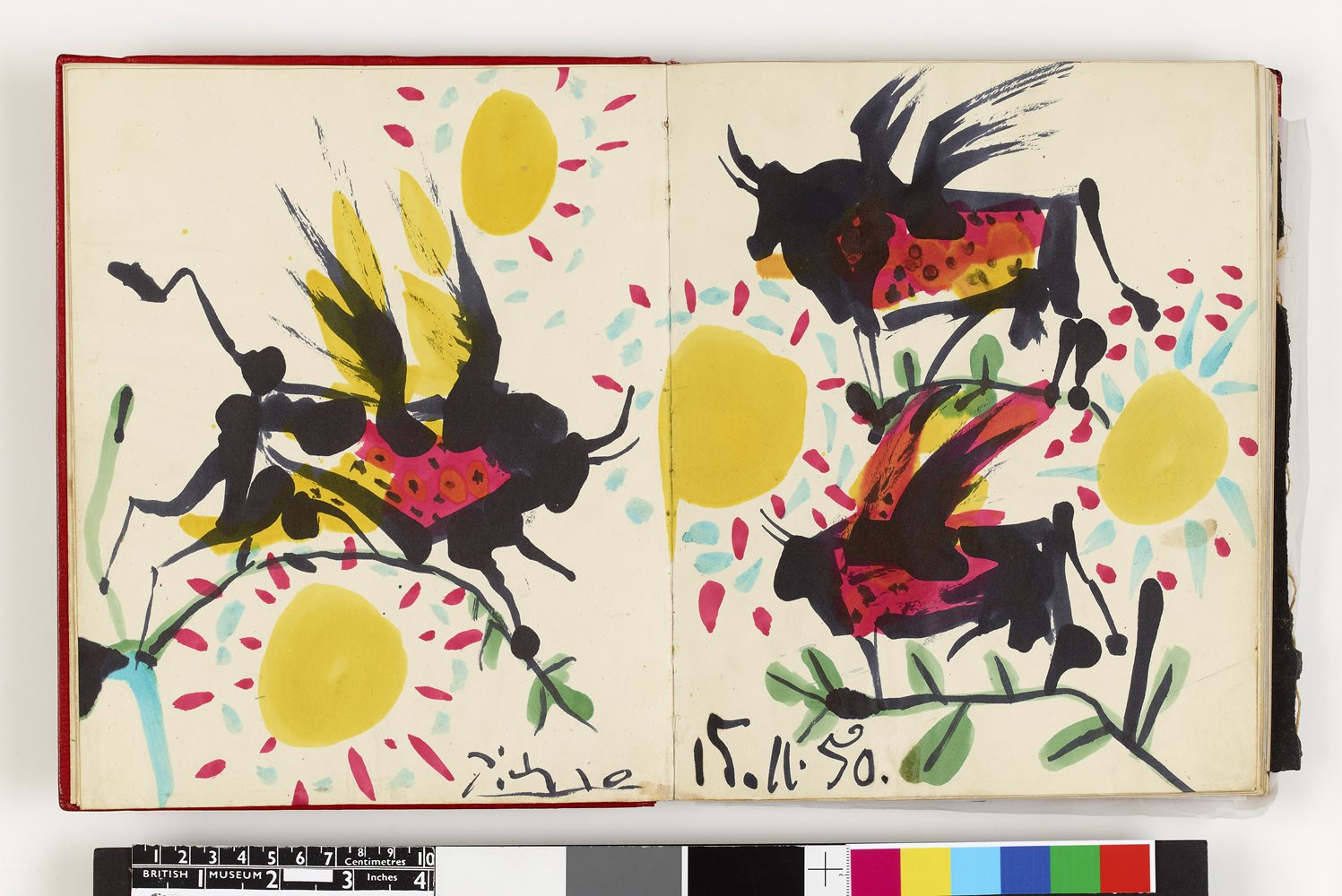
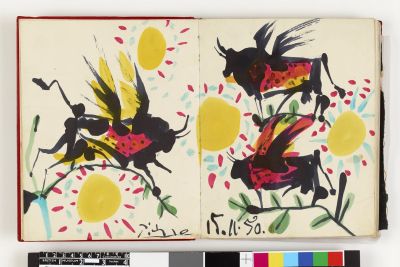
Leaping bulls, 1950
© Succession Picasso/DACS, London 2024.
This drawing in watercolour and coloured
inks is from the Institute of Contemporary
Arts Visitor’s Book. It is a drawing Picasso
made when he visited Britain in 1950 to
attend the third International Peace
Congress in Sheffield, organised by the
Communist Party, which he joined in 1944.
It was donated to the British Museum in
1975 by artist and writer Roland Penrose
(1900‒1984).
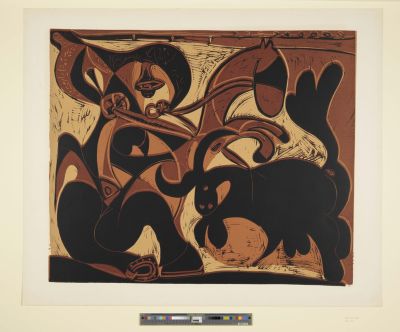
Pike II, 1959
© Succession Picasso/DACS, London 2024.
Picasso focused on making linocuts from the
mid-1950s until around 1962. This coloured
example shows the artist’s continuing
interest in the theme of the bullfight.
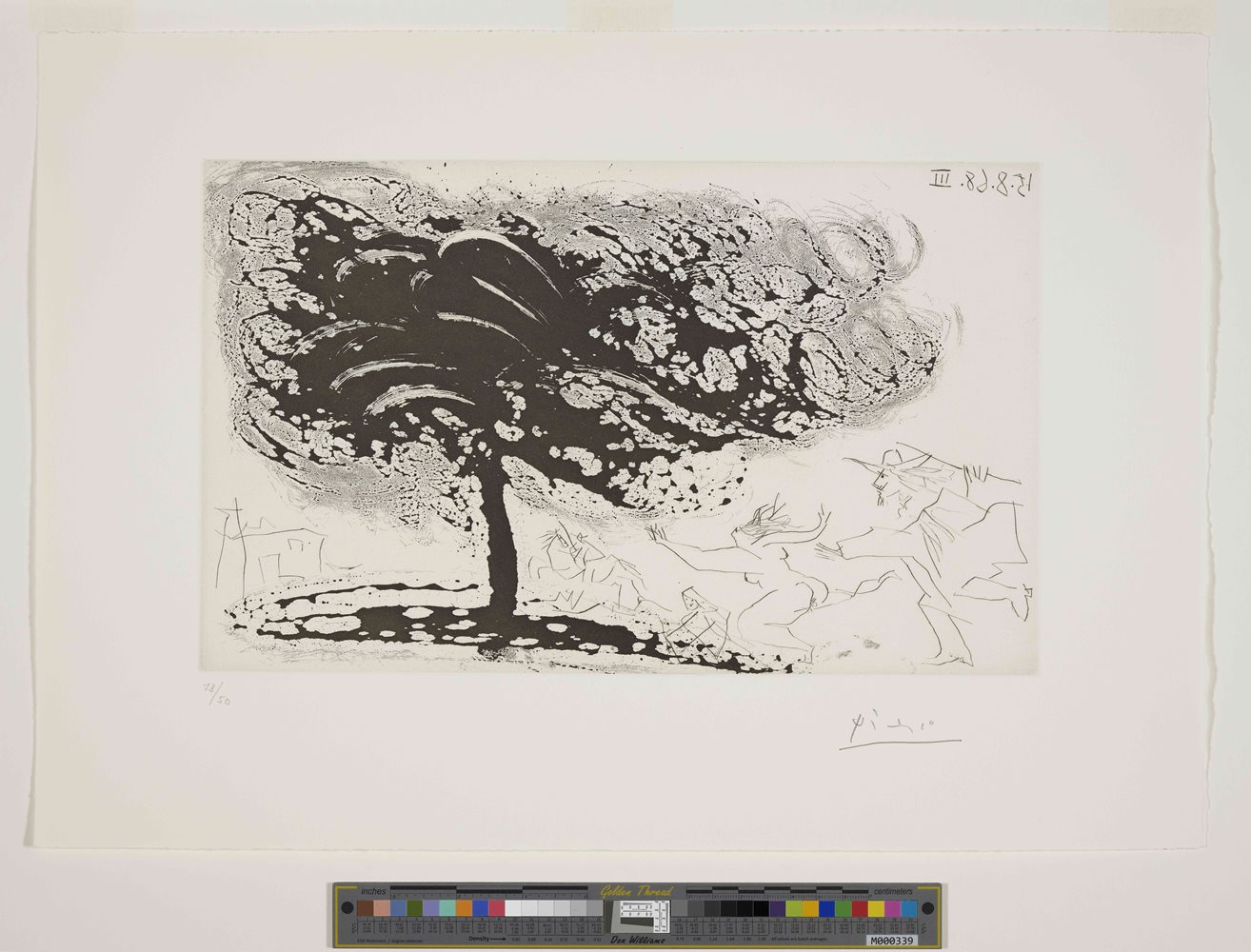
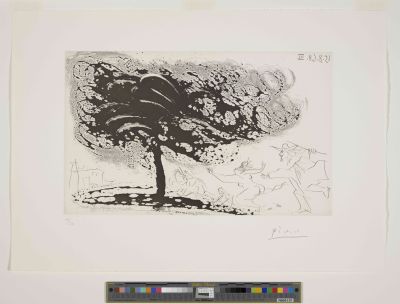
Tree in the storm, with flight towards a
church, 15 August 1968
© Succession Picasso/DACS, London 2024.
Sugar aquatint and drypoint on greased
plate. This print from the 347 Suite
demonstrates his playfulness with
printmaking at this time, the storytelling
element of the suite, and his experiments
with unusual techniques, such as greasing
the plate. Picasso: printmaker is the first
time it will be displayed
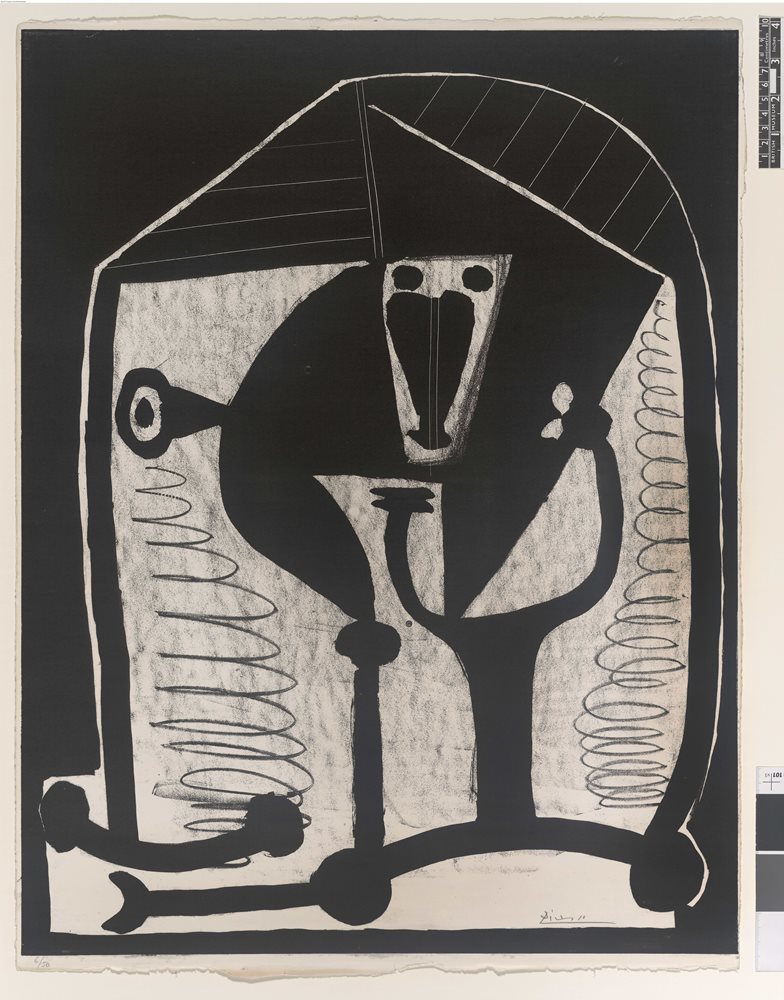
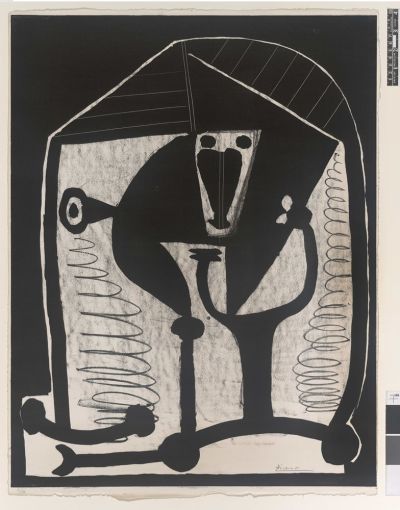
Figure, 1948
© Succession Picasso/DACS, London 2024.
This lithograph is a portrait of the artist
Françoise Gilot (1921‒2023). She was
Picasso’s partner with whom he moved to
the South of France in 1948 following the
breakup of his relationship with Dora Maar.
It is one of a group of post-war lithographs
and aquatints that the British Museum
acquired in 2016.
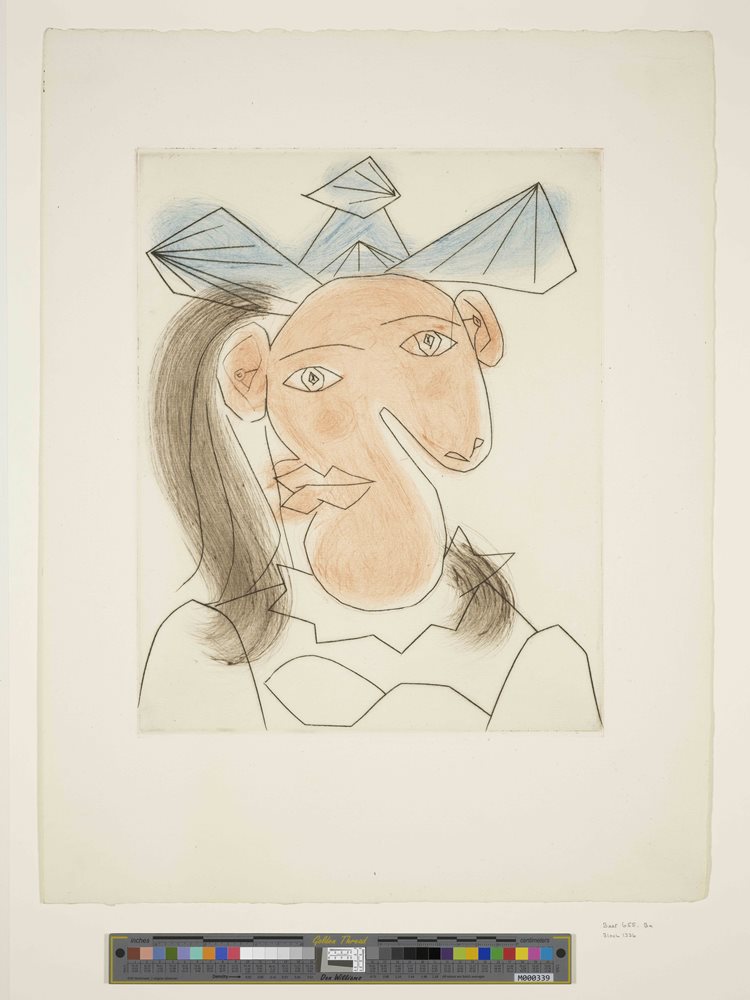
Head of a woman no. 7. Portrait of Dora
Maar, 1939
© Succession Picasso/DACS, London 2024.
The exhibition will explore Picasso’s
relationships through his art. This drypoint
depicts the Surrealist photographer Dora
Maar (1907‒1997), with whom he had a
relationship between 1936 and 1945. She
was also the inspiration for his Weeping
Woman paintings in 1937. She disliked his
portraits of her, describing them all as ‘lies’.
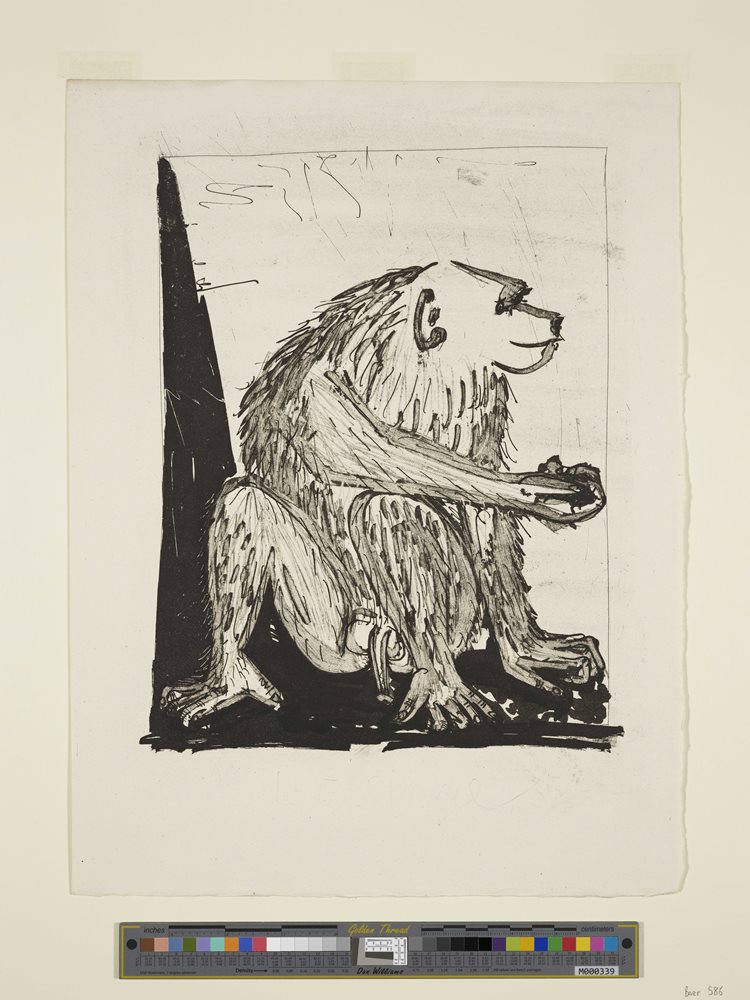
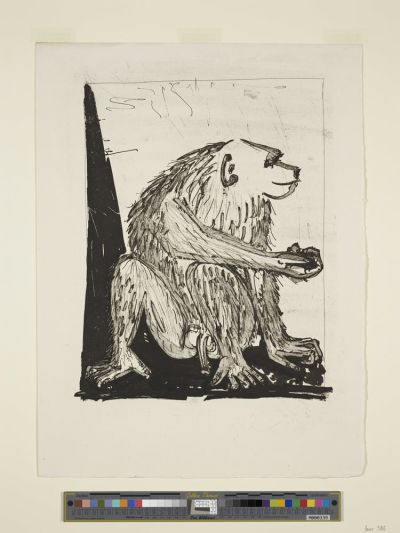
Monkey, 1936
© Succession Picasso/DACS, London 2024.
Illustration for Original etchings for texts by
Buffon (Paris: Martin Fabiani, 1942), sugar
aquatint and drypoint. Picasso loved
animals and kept many pets throughout his
life. The exhibition includes images of a
monkey, frogs, a lizard, owls, a goat, a
pigeon and a hen. He kept a pet monkey for
a short time as a young artist in Paris and
enjoyed watching the monkeys in the zoo.
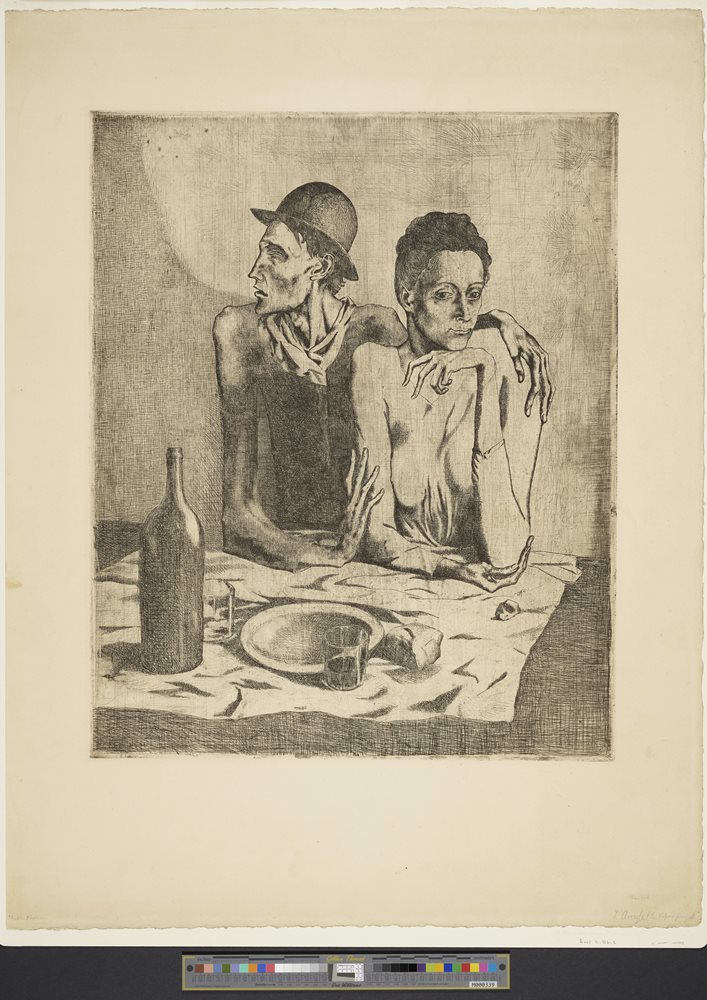
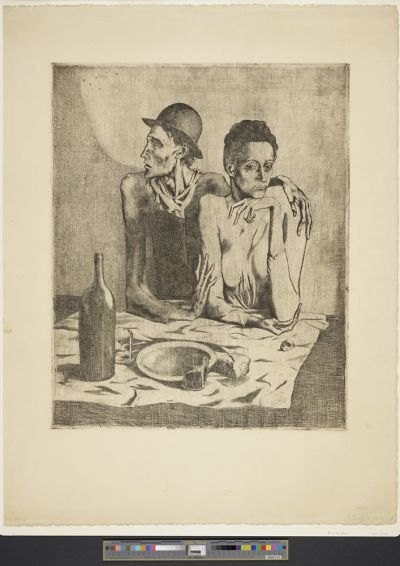
The frugal meal, 1904
© Succession Picasso/DACS, London 2024.
This etching was the first Picasso made in
Paris and is considered his first as a
professional artist. It is one of his most
powerful works in any medium from what is
known as his Blue Period (1901-04). The
period often depicted people on the
margins of society, including travelling poor
people and those suffering great poverty.
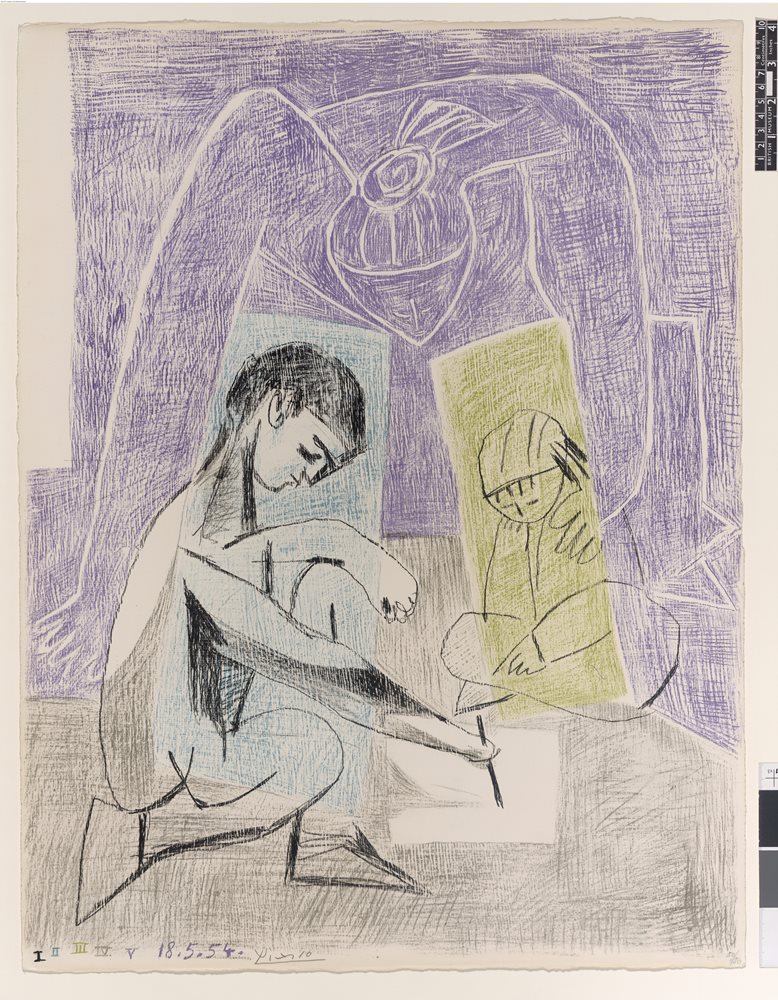
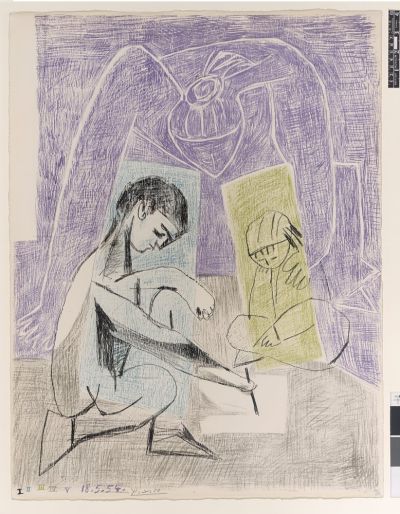
The little artist, 1954
© Succession Picasso/DACS, London 2024.
This colour crayon transfer lithograph
depicts Françoise Gilot and their two
children, Claude and Paloma, on a visit to
Picasso after she left him in 1953.
Faun uncovering a woman, 12 June 1936
© Succession Picasso/DACS, London 2024.
This print from the Vollard Suite is a sugar
aquatint, scraper and engraving. The British
Museum acquired all 100 etchings from the
Vollard Suite (1930-37) in 2011 as a gift
from Hamish Parker and held an exhibition
in 2012. The current exhibition will show a
selection of his prints from the suite in the
context of his entire printmaking career,
showing the influence of classical art in the
1920s and 30s and the development of his
skills as a printmaker at this time.
Picasso, his work and his audience, 16-22
March 1968
© Succession Picasso/DACS, London 2024.
This is the first etching in the 347 Suite. In
1968, aged 86, Picasso produced 347
etchings, drypoints and aquatints in under
seven months. Together they became
known as the 347 Suite. Five prints from the
suite, including this one, were shown in
Gallery 90 in the 2018-19 exhibition New
Acquisitions: Gozzoli to Kara Walker, but no
others have been shown.
Leaping bulls, 1950
© Succession Picasso/DACS, London 2024.
This drawing in watercolour and coloured
inks is from the Institute of Contemporary
Arts Visitor’s Book. It is a drawing Picasso
made when he visited Britain in 1950 to
attend the third International Peace
Congress in Sheffield, organised by the
Communist Party, which he joined in 1944.
It was donated to the British Museum in
1975 by artist and writer Roland Penrose
(1900‒1984).
Pike II, 1959
© Succession Picasso/DACS, London 2024.
Picasso focused on making linocuts from the
mid-1950s until around 1962. This coloured
example shows the artist’s continuing
interest in the theme of the bullfight.
Tree in the storm, with flight towards a
church, 15 August 1968
© Succession Picasso/DACS, London 2024.
Sugar aquatint and drypoint on greased
plate. This print from the 347 Suite
demonstrates his playfulness with
printmaking at this time, the storytelling
element of the suite, and his experiments
with unusual techniques, such as greasing
the plate. Picasso: printmaker is the first
time it will be displayed
Figure, 1948
© Succession Picasso/DACS, London 2024.
This lithograph is a portrait of the artist
Françoise Gilot (1921‒2023). She was
Picasso’s partner with whom he moved to
the South of France in 1948 following the
breakup of his relationship with Dora Maar.
It is one of a group of post-war lithographs
and aquatints that the British Museum
acquired in 2016.
Head of a woman no. 7. Portrait of Dora
Maar, 1939
© Succession Picasso/DACS, London 2024.
The exhibition will explore Picasso’s
relationships through his art. This drypoint
depicts the Surrealist photographer Dora
Maar (1907‒1997), with whom he had a
relationship between 1936 and 1945. She
was also the inspiration for his Weeping
Woman paintings in 1937. She disliked his
portraits of her, describing them all as ‘lies’.
Monkey, 1936
© Succession Picasso/DACS, London 2024.
Illustration for Original etchings for texts by
Buffon (Paris: Martin Fabiani, 1942), sugar
aquatint and drypoint. Picasso loved
animals and kept many pets throughout his
life. The exhibition includes images of a
monkey, frogs, a lizard, owls, a goat, a
pigeon and a hen. He kept a pet monkey for
a short time as a young artist in Paris and
enjoyed watching the monkeys in the zoo.
The frugal meal, 1904
© Succession Picasso/DACS, London 2024.
This etching was the first Picasso made in
Paris and is considered his first as a
professional artist. It is one of his most
powerful works in any medium from what is
known as his Blue Period (1901-04). The
period often depicted people on the
margins of society, including travelling poor
people and those suffering great poverty.
The little artist, 1954
© Succession Picasso/DACS, London 2024.
This colour crayon transfer lithograph
depicts Françoise Gilot and their two
children, Claude and Paloma, on a visit to
Picasso after she left him in 1953.
I curatori hanno esplorato e raccontato l'interesse e l'attenzione di Picasso per la litografia e, successivamente, la svolta con la stampa su linoleum, subito dopo la seconda guerra mondiale; ciò coincise con il suo trasferimento nel sud della Francia, segnando un cambiamento di stile di vita evidente nel suo lavoro. Tra i temi più rappresentati ritroviamo il circo, la corrida, l'amore, il sesso e le interazioni su carta di Picasso con artisti del passato.
La mostra si conclude con una selezione di opere provenienti dalla Suite 347
Picasso: printmaker
La mostra è aperta dal Lunedì al Giovedì dalle 10.00 alle 17.30.
Venerdì fino alle 20.30, Sabato e Domenica dalle 9.00 alle 17.30
Biglietto adulti £11.00
Articolo scritto da
Vincenzo Sebastiano
Giornalista, storico dell'arte, architetto